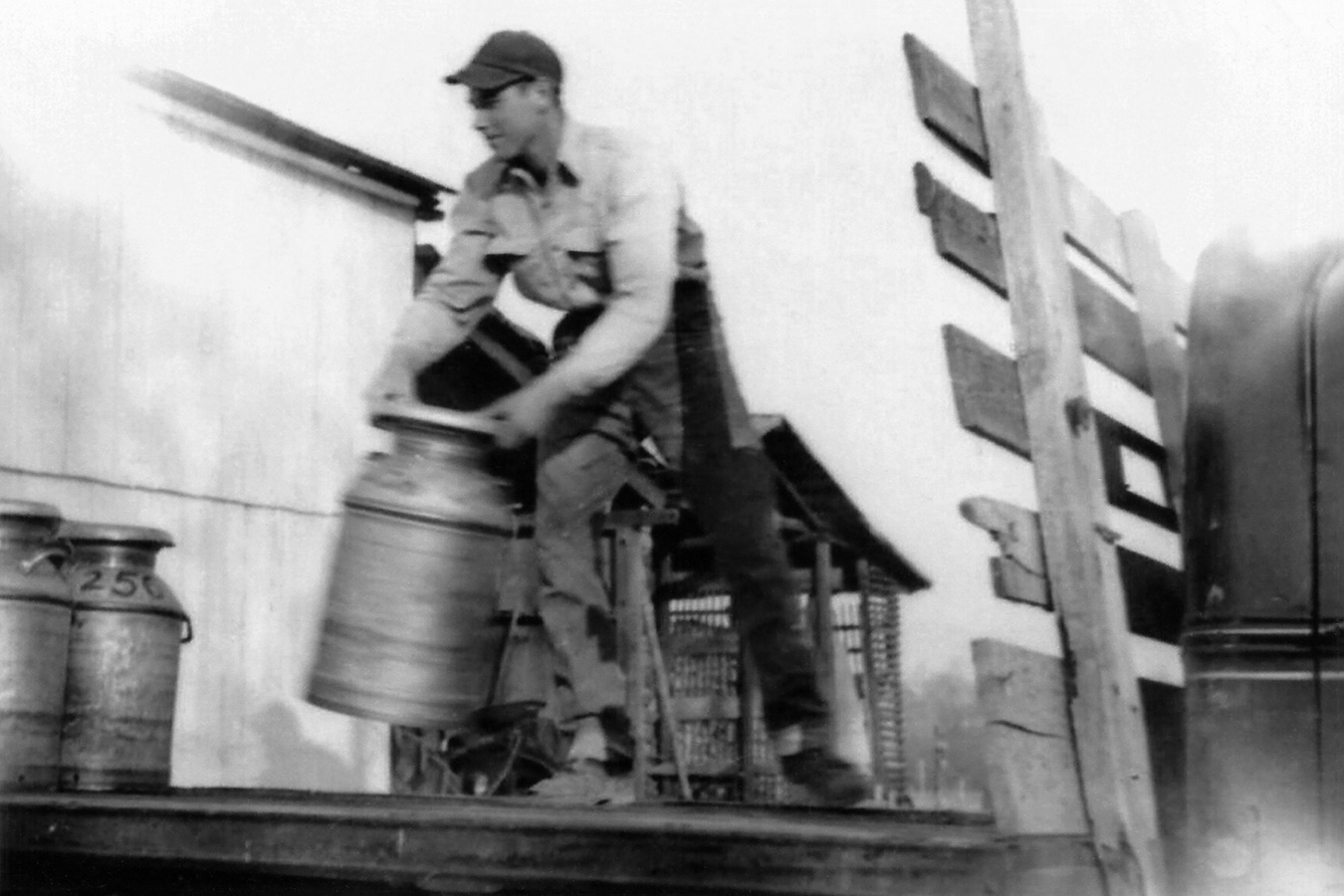
Tom Clowney returns home in 1952 after delivering milk to Martin Century Farms in Montgomery County, PA.
Master Farmer and Preservation Advocate Tom Clowney Nominated as Unsung Champion for America250 Initiative
In 2024, I stumbled on America250, a nonpartisan initiative led by the U.S. Semiquincentennial Commission. Its goal: to engage all Americans in preparation for our country’s 250th anniversary of the signing of the Declaration of Independence in 2026. Among its areas of engagement, “Our American Story” invited nominations of living people—History’s Unsung Champions—whose contributions to the collective American story merit sharing and preservation as a permanent record.
This is my submission for Tom Clowney, my grandfather, who played a key role in shaping who I am today. Published with his permission, I hope it encourages you to think about someone special in your life. Unless otherwise noted, all photos are courtesy of Tom Clowney.
Who is Tom Clowney?
Thomas "Tom" Clowney was born on October 7, 1931, in Bristol, Bucks County, Pennsylvania, near Philadelphia. The third of three siblings, he was raised Catholic and graduated from Lansdale High School in 1949. In 1955, he married Joanne Weiss, who was also raised Catholic. They reared three young children on a small farm in nearby Montgomery County. By 1960, urban sprawl compelled them to move west to Adams County, where they established a productive dairy farm.
A lifelong farmer, Tom received many awards and honors during his career, including Mid-Atlantic Master Farmer. He is a respected and beloved figure well beyond Barlow, the small community where he resides. He was married to Joanne for 64 years until she passed. Together, they had five children, 13 grandchildren, and 17 great-grandchildren. At age 92, Tom's leadership continues to inspire family, friends, and communities throughout the Commonwealth.
An Unsung Champion
For over 75 years, Tom Clowney has weathered farm life in the Commonwealth of Pennsylvania. He received many awards and honors for his impact on farming and the community. Tom's legacy as a master farmer and preservation advocate contributes to the American story, inspiring future generations to follow their dreams.

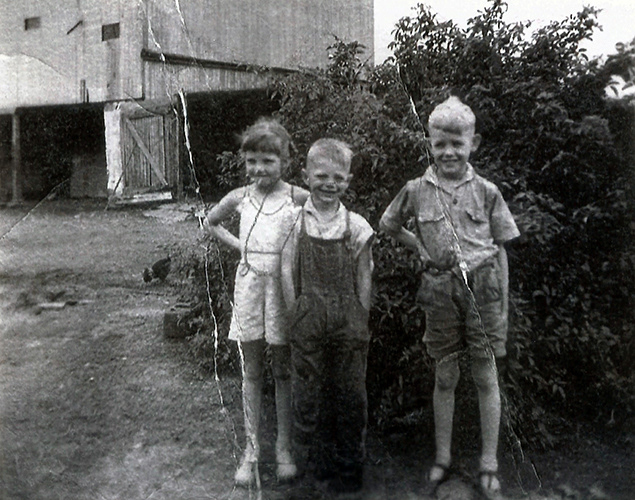
Tom Clowney (center) posed with his siblings in 1939 on the family farm in Center Square, PA.
Early Years
Born during the Great Depression, Clowney’s early years prepared him for a life of resilience and self-sufficiency. He grew up on a rented farm in Center Square with a cow and chickens. The family garden provided extra produce to sell at a roadside stand during the summers. His father, Samuel Boyd Clowney, sustained employment as a lineman with the Philadelphia Electric Company.
By late 1945, World War II and rationing—everything from tires and gasoline to meats and tinned goods, except sugar—had ended. Tom was 14 and began farming on land his father rented for $15 a month in North Wales. The 30-acre farm had no electricity or running water. Two years later, he bought an Allis Chalmers tractor with his older brother William. They farmed together until William left to work like his father for the Philadelphia Electric Company.

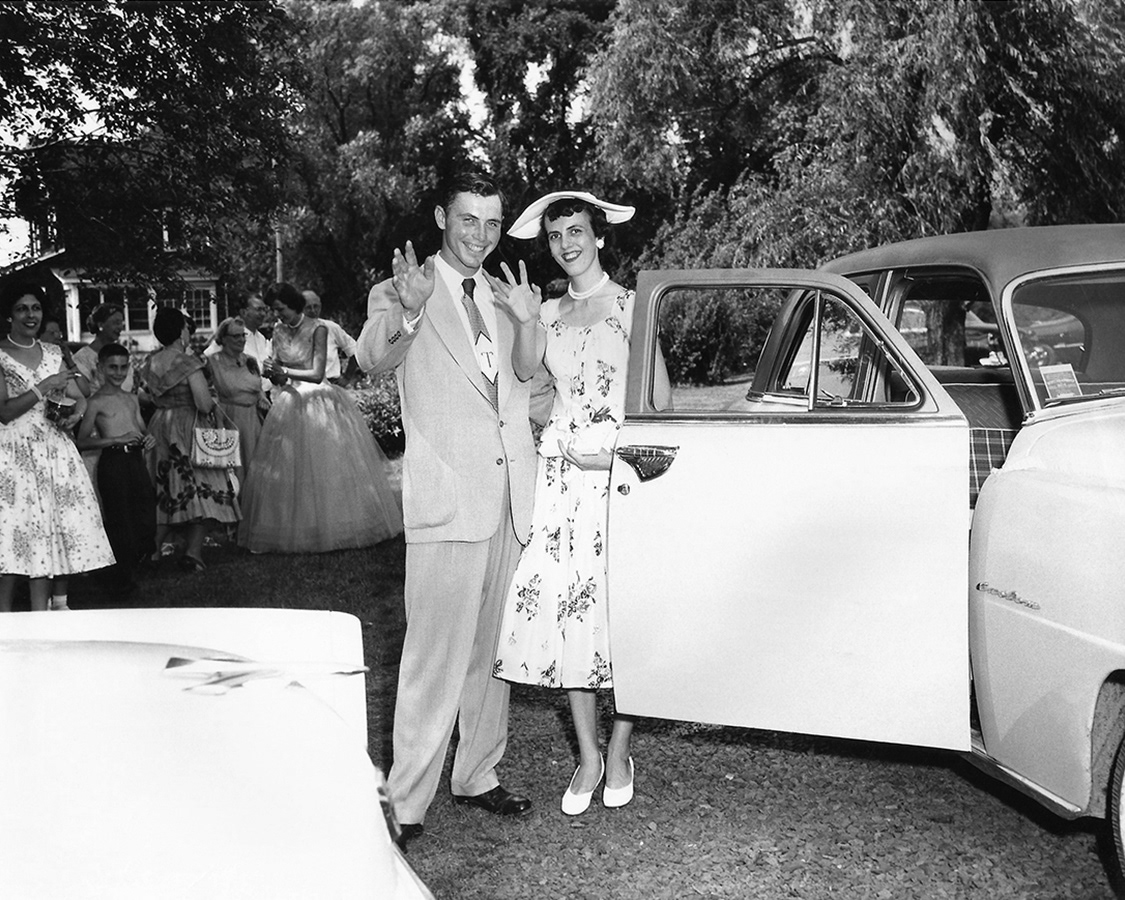
A "match made in heaven," Mr. and Mrs. Thomas E. Clowney were married in Lansdale, PA, on July 16, 1955.
Tom graduated high school in 1949. In the early 1950s, he had enough savings to help his father, Samuel, buy the farm for $20,000. They sold milk from their Guernseys to local creameries, including Witchwood Farm and M. Sommer Creamery. By 1955, Tom was married and living on the farm with his wife Joanne, where they operated the dairy. He delivered milk to Martin Century Farms in his first truck, a 1941 used Dodge Mack.
The next few years were prosperous, and they welcomed three children into the family. But Philadelphia’s suburbs soon encroached on their land, compelling them to make a life-changing decision.

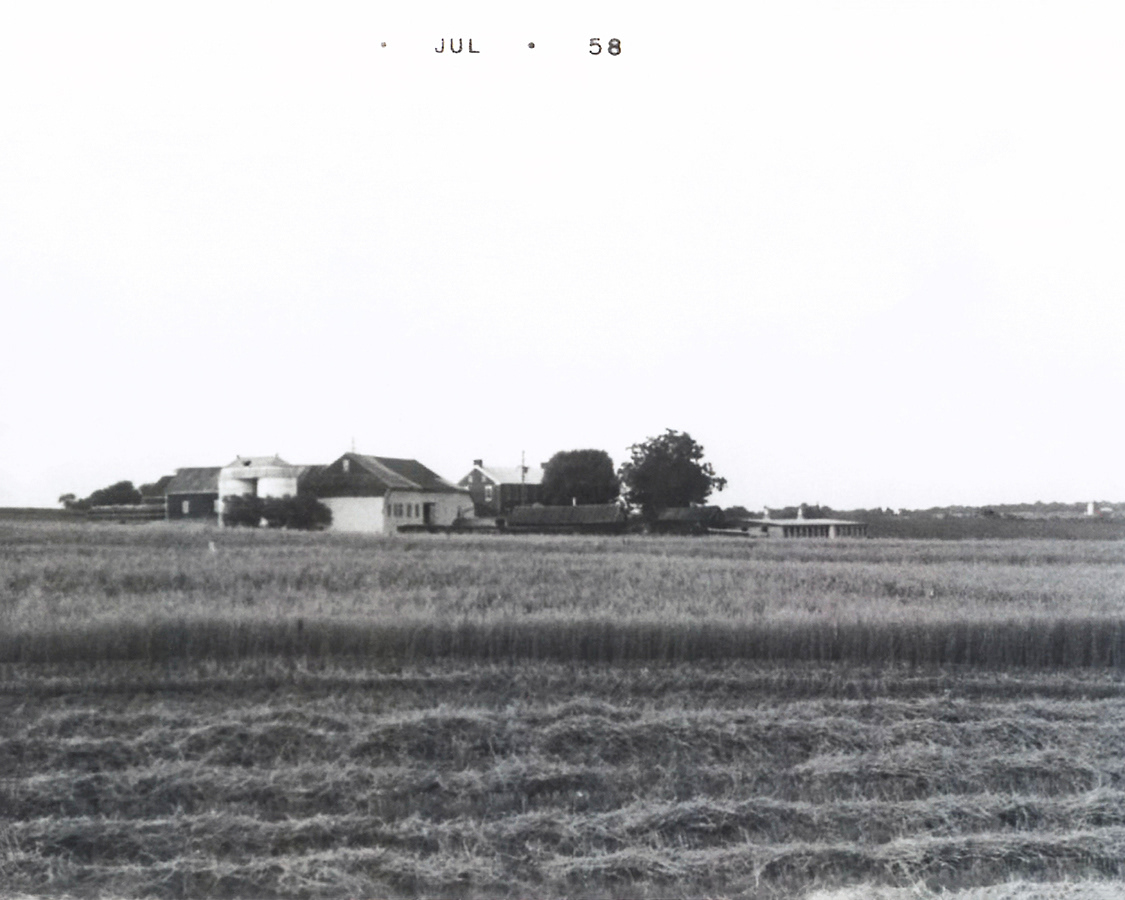
This photo was taken at the Grover Yingling Farm during a wheat harvest in 1958, two years before Tom Clowney purchased the property.
The Right Farm
In April 1960, Clowney received a letter from John Bream of West’s Farm Agency, Inc. in Gettysburg. Among other properties on his bargain list, Bream called out a specific dairy farm, No. J–2782, and cemented Tom’s interest. He closed the letter by stating, “Trusting that I may have the privilege of helping you locate the RIGHT farm at an early date…”
Tom contacted the U.S. Department of Agriculture Farmers Home Administration to secure a loan for purchasing “reasonably priced” property in Adams County. After their inspection, the agency approved everything except the property’s 1700s-era log barn, which they deemed too old and too expensive to renovate. They ultimately denied his request by advising him to search for a different farmstead.
Grover Yingling, the farm's then-owner and a respected citizen in the community, stepped in to help. He drove Tom to meet Chester Byers, Vice President of the Littlestown State Bank, at his house on a day the bank was closed to request a loan. After petitioning and offering to provide references, Tom and Chester shook hands to seal the deal. He received the loan two weeks later.
Byers was impressed by Tom’s history and character, remarking in an approval letter, “…the inquiries to which we have received answers from your credit ratings and ability as a farmer have all been very favorable, which proves to us that you should make a good neighbor and resident of our community.”

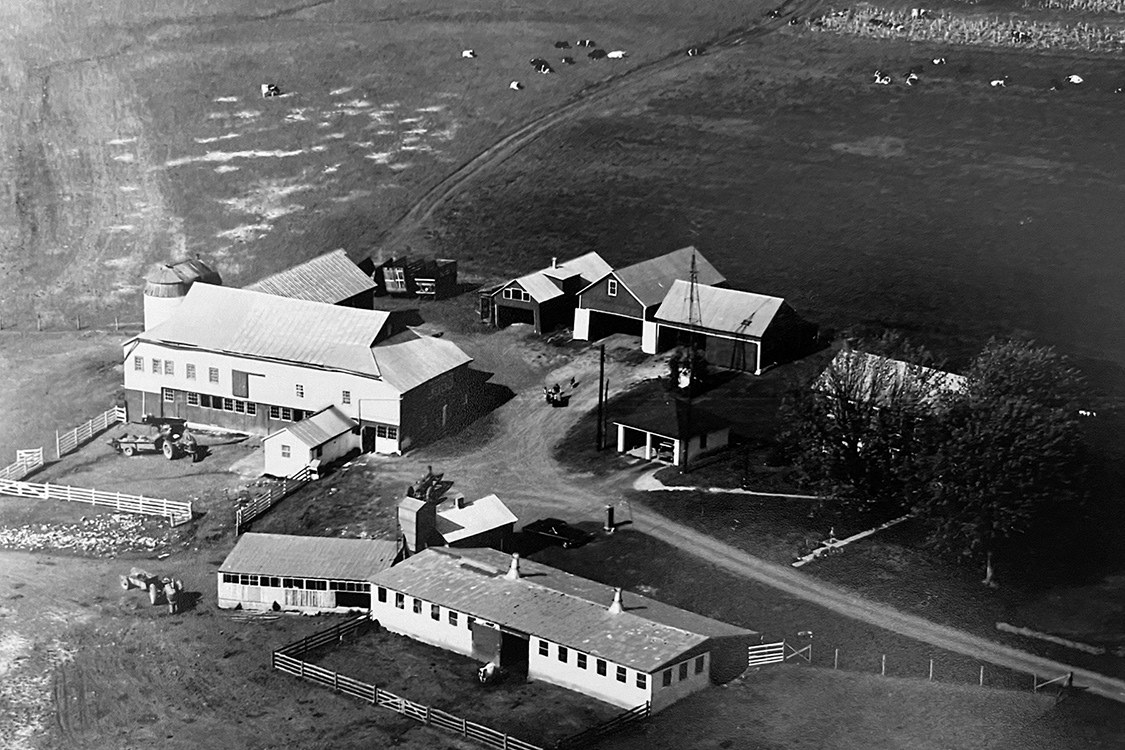
Lagging Stream Farm, later named in 1977, provided Tom Clowney and his family with a fresh start in rural Adams County.
Adams County
Later that year, three days after Thanksgiving, Clowney moved his family and their belongings 140 miles west to a 120-acre farmstead south of Gettysburg National Military Park, not far from Dwight and Mamie Eisenhower’s farm. The property resides within the Manor of Maske, a 43,500-acre boundary warranted by William Penn’s heirs from the land granted to him by King Charles II of England.
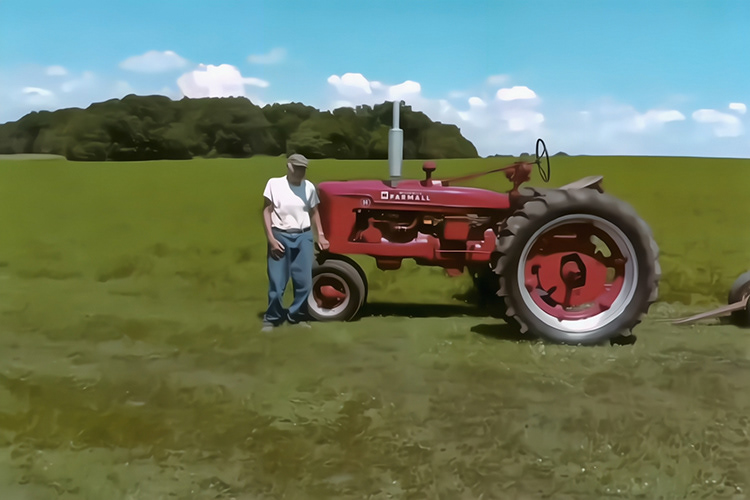
Their new farm included an 8-room brick farmhouse built in 1845. It was spacious and large enough for a growing family. It also had a dairy barn, milk house, poultry house, outbuildings, and a shed for the 1944 Farmall International H Tom hauled from his former farm in Montgomery County. For decades, the log barn continued to be used—and is still used today—to store hay, cotton seed, and grain, as well as equipment and cattle.
Tom’s first year farming in Adams County was manageable. But the next few years brought challenges. A multi-year drought led to water restrictions, fire risk, and crop production losses throughout the region. To sustain the farm, he had to buy reduced-market-price hay and shelled corn from the U.S. Department of Agriculture. During this period, Tom relied on his faith in God. His determination and compassion strengthened his character as a steward of the land and his family, despite the challenges they faced.

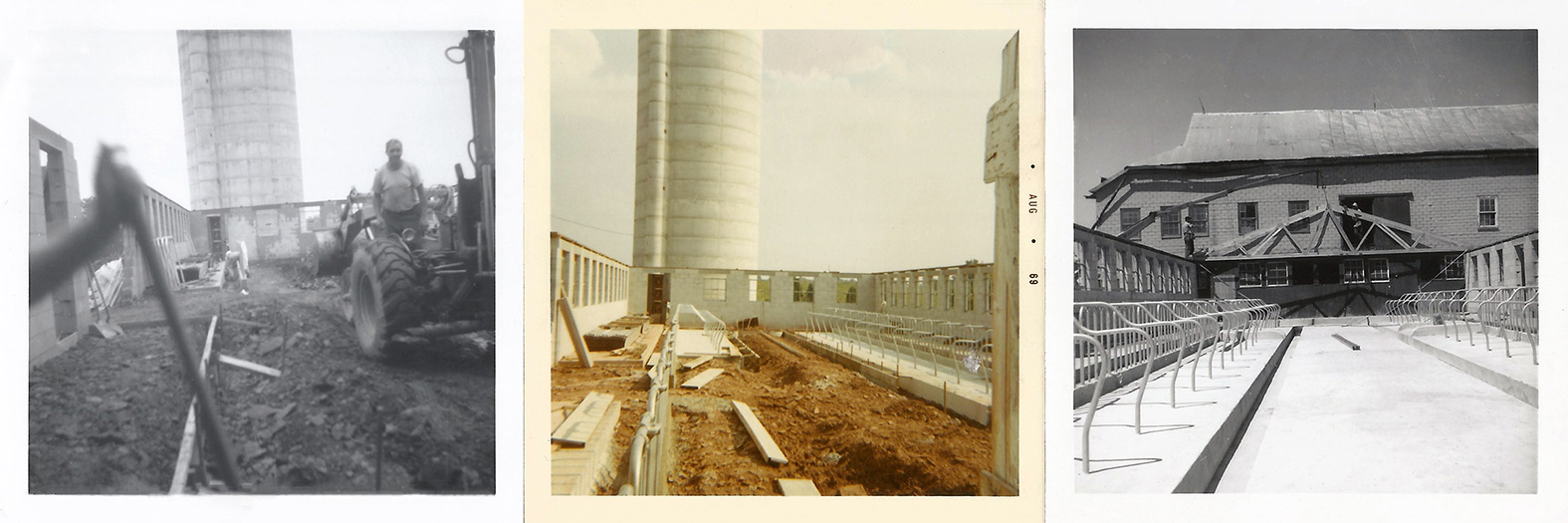
In 1969, a 57-stall milking barn with pipeline milker equipment was added to the 1700s-era log barn.
By the early 1970s, Tom and Joanne were raising five children while improved conditions cleared the way for the farm’s modernization. They added two new silos and a new 57-stall milking barn with pipeline milker equipment. During this time, Tom became involved in various organizations, including the Adams County Farm Bureau, Holstein Association, Dairy Herd Improvement Association, and Penn State Extension Board. He also began serving on the local parish council at St. Francis Xavier Church.

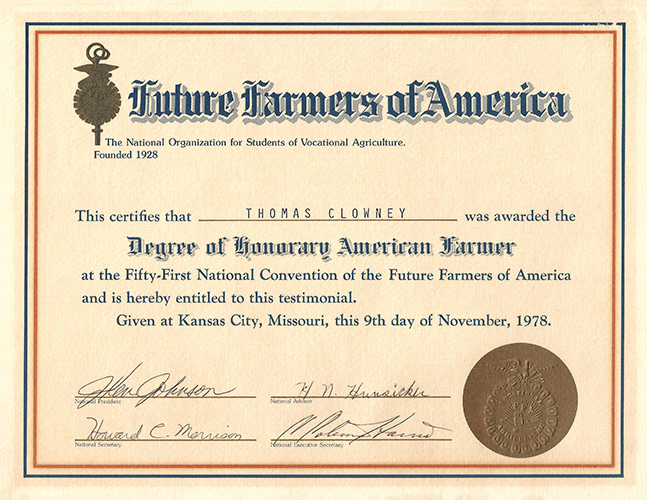
Tom Clowney was awarded the Degree of Honorary American Farmer at the 51st National Convention of the Future Farmers of America in 1978.
Lagging Stream Farm
In 1977, Clowney, already a grandfather, began planning the farm’s future. He partnered with his eldest son, Robert, and christened the property Lagging Stream Farm, inspired by its two “never-failing” streams. The next year, he was awarded the Degree of Honorary American Farmer at the 51st National Convention of the Future Farmers of America.
The next decade was tough but not bleak; record inflation and a global energy crisis impacted American farmers. Farm income declined, and milk prices were fair, so it was crucial to maintain a low debt load for survival. Lagging Stream Farm weathered these challenges while Tom’s extended family grew. By the end of the decade, his youngest son, John, joined the partnership.
In 1994, under Tom’s supervision, the farm met the requirements of the Chesapeake Bay Program for its conservation practices. These practices focused on reducing agricultural runoff into nearby streams and rivers and implementing nutrient management planning. The goal is to contribute to environmental protection and long-term farm sustainability.
Two years later, the farm hosted a Farm City Festival designed to foster relationships between farmers and non-farmers and inspire appreciation for agriculture. Guided tours introduced visitors to topics such as soil conservation, strip cropping, and nutrient management. Supported by Kiwanis International, Tom and his family welcomed about 1,000 people, with 70 percent visiting from nearby urban areas.

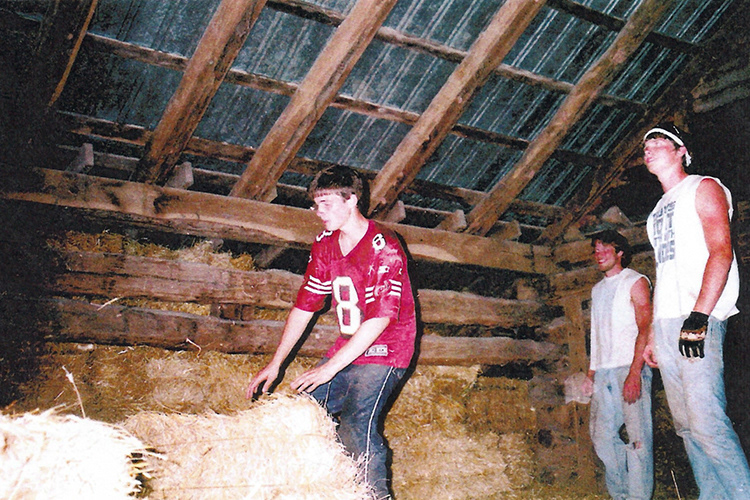
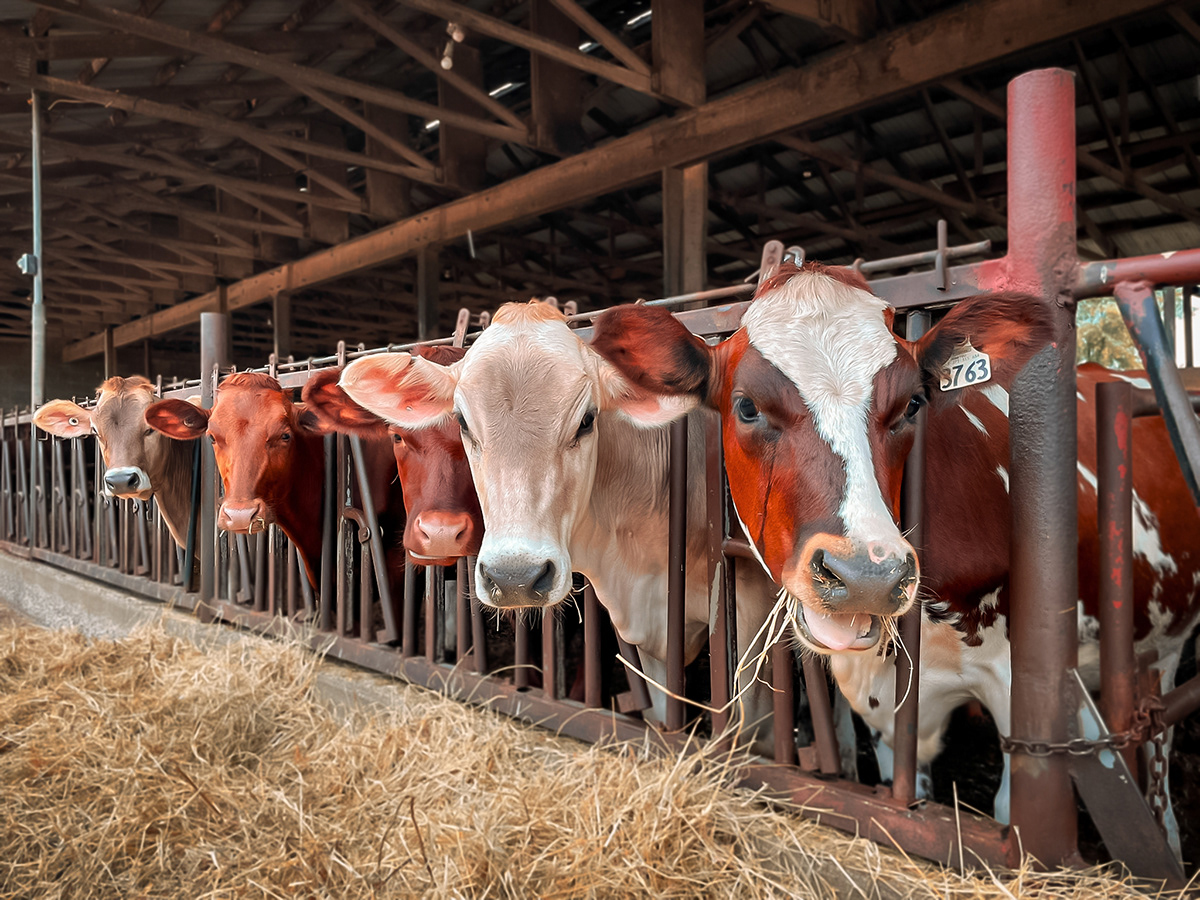
Tom Clowney’s grandsons, Mark, Zach, and Tyler, are shown stacking straw bales in the log barn in the 2000s.
In the years to come, the farm also hosted school and foreign agribusiness tours. By this time, many newspaper and magazine articles began to cover Tom’s story. Tom also began writing articles for the local newspaper on agriculture, local history, and family, a tradition that continues today.

In 1990, Tom Clowney registered 210 acres of owned property at Lagging Stream Farm in the Adams County Agricultural Land Preservation Program.
Founding the Adams County Agricultural Land Preservation Board
In 1990, Clowney became a founding member and served as the first chair of the Adams County Agricultural Land Preservation Board. This government-sponsored program protects viable farmland from commercial and housing development to preserve the county’s rural character. The program preserves an average of 800 acres of farmland each year.
Tom’s leadership galvanized a preservation movement in the county that continues today. One of the first properties to be certified, Lagging Stream Farm will never be developed. In 2020, after 30 years, he stepped down from its board of directors.

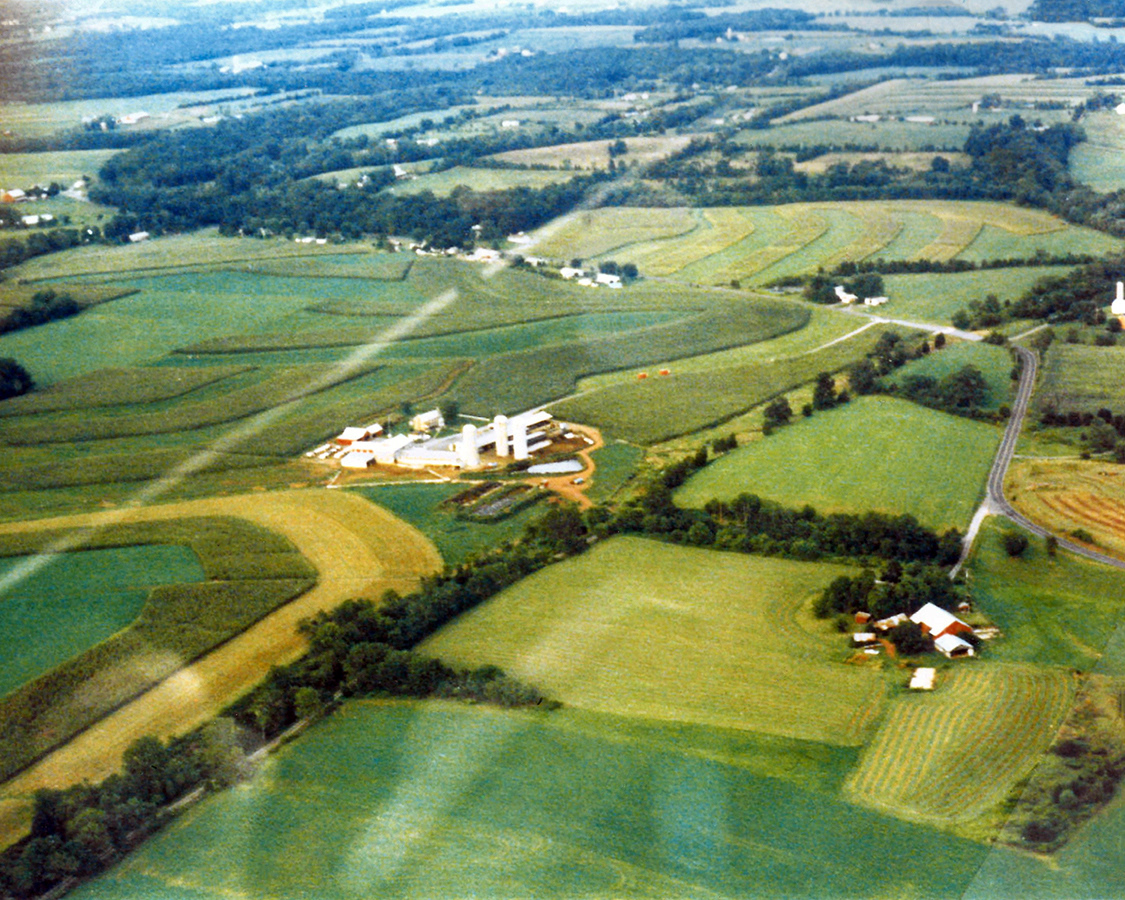
Today, Lagging Stream Farm custom raises steers and dairy heifers for other farms. Photo by Scott Clowney.
Recent Years
Clowney was an active member of the Cumberland Township Historical Society and played a key role in commemorating the former site of the Barlow Creamery. The creamery, which included two ice houses and an ice-making plant, was active from 1898 to 1928 and was well-known for its "Barlow Ice Cream." In 2017, Tom and Pennsylvania Department of Agriculture Secretary Russell Reading unveiled a historical roadside marker at the site.
That same year, Lagging Stream Farm managed over 400 acres of owned and rented land. Alongside his sons, Robert and John, and grandson Zach, Tom continued working at age 87. They cultivated corn, alfalfa, hay, and rye crops to support over 300 head of Holstein dairy cattle. However, the effects of a severe recession impacting the agriculture industry from the mid-2010s threatened the farm’s livelihood.
In late 2018, the recession's lingering effects worsened. Milk and crop prices continued to decline, causing Lagging Stream Farm to sell its entire herd of Holsteins. No longer in the dairy business, the farm now leases its barns for beef cattle. It continues to plant corn but has introduced soybeans to its crop production, and it sells more hay. Tom's sons and grandson continue to manage the farm, in addition to working off-farm jobs, while he assists with miscellaneous tasks.

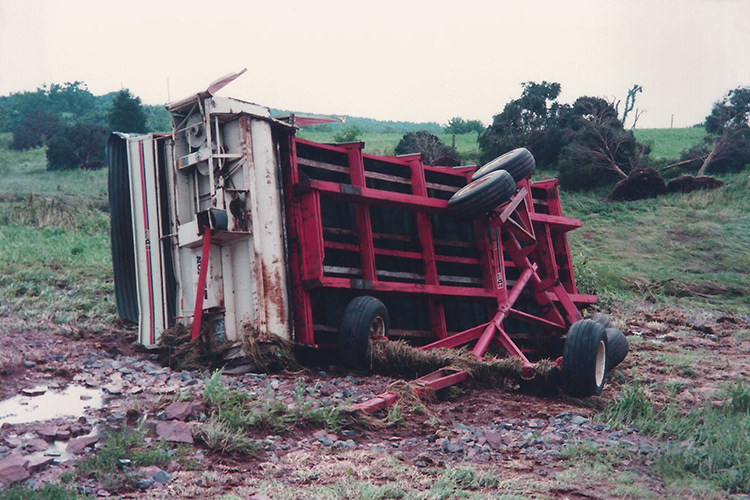
In 1996, straight-line winds from a microburst caused damage at Lagging Stream Farm, including downed trees and overturned wagons.
Occupational Hazards
Farming is one of the most hazardous occupations in America. Injuries and fatalities sustained from livestock, equipment, and weather are commonplace. No farm, including Lagging Stream Farm, is immune from traumatic incidents.
In 1977, Tom's then-15-year-old son, John, nearly died when he was pulled into a forage wagon while unloading corn silage. After emergency surgery and four weeks in the hospital, it took him eight months to a year to heal. When interviewed in 1995 about his ordeal, John stated, "These machines can do so much, but they have no mercy. Human flesh and bones don't mean much to them."

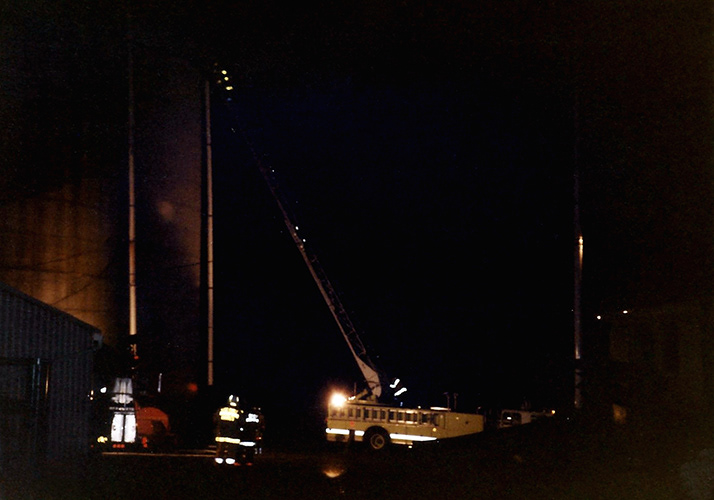
A silo filled with haylage caught fire at Lagging Stream Farm in 1991.
Several incidents occurred on the farm in the 1990s. A silo filled with hay caught fire in 1991. In June 1996, WGAL reporter Ed Weinstock arrived at the farm to cover damage from a microburst, resulting in portions of roofs on the farmhouse, log barn, and silo being blown off. Two years later, Phillip Redding, a 70-year-old farmhand who had been working at the farm for 10 to 12 years, was struck by a 10-ton runaway wagon while trying to guide it to prevent damage. He sustained serious injuries and was flown to the Maryland Shock Trauma Center in Baltimore, where he passed away nine days later.
In 2014, Tom's youngest granddaughter, Renee, tragically passed away in a vehicle accident that occurred less than a mile and a half from the farmstead. At 20 years old, her enthusiasm, work ethic, and steadfast commitment to the farm's dairy operation were a testament to Tom's farming ambitions. She was an inspiration to her family and friends.
Over the years, the farm has encountered other incidents, including tractor, wagon, and truck rollovers. Each family member has a story or two involving burns, falls, lacerations, or broken bones. Agriculture is a high-risk occupation, and these events prompted Tom to raise awareness for future generations about the importance of farm safety.

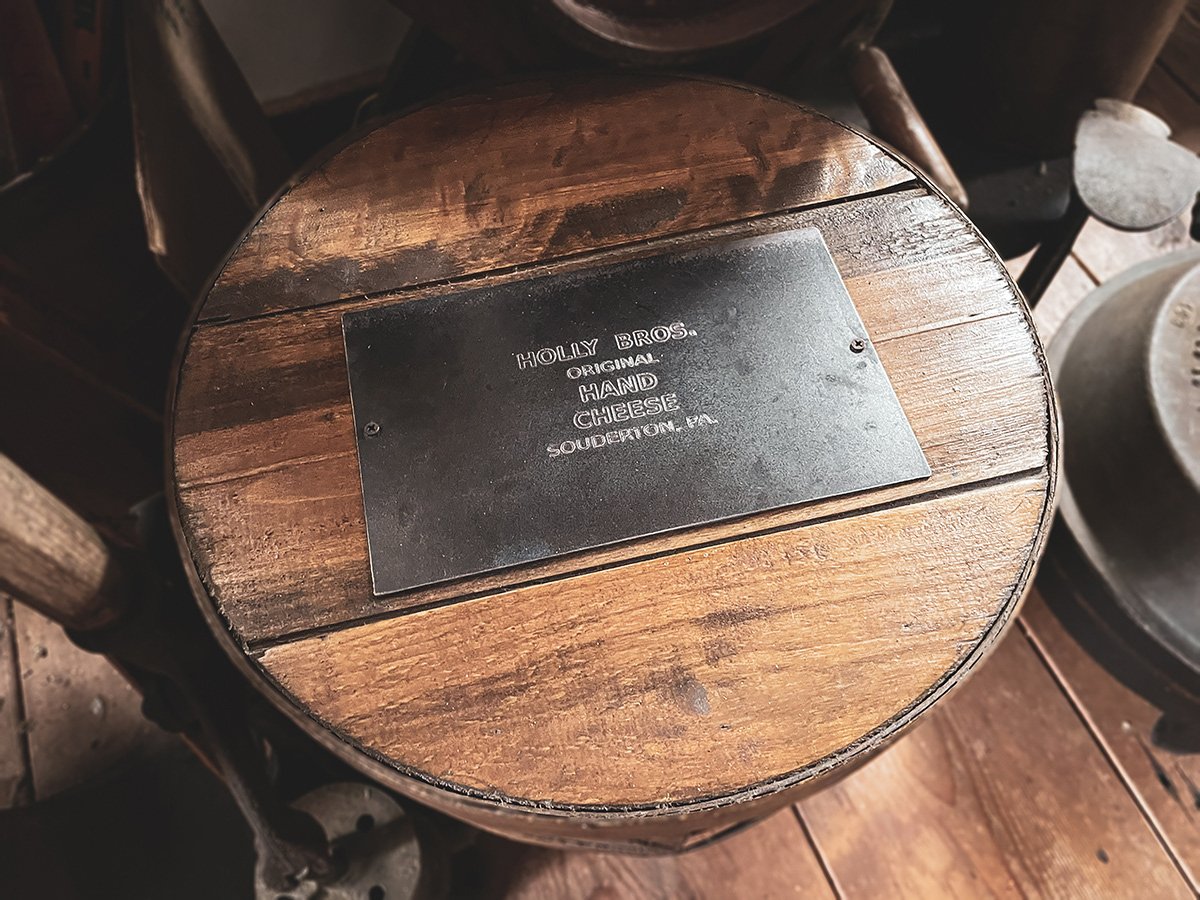
Adam Holly, the great-grandfather of Tom Clowney’s wife, Joanne, pioneered Handkäse in the Northeast in the 1870s and supplied blocks of cheese in round wooden boxes to buyers. Photo by Scott Clowney.
Thomas Clowney Collection
In his youth, Clowney developed an interest in history. He valued his Irish ancestry and Southern roots and appreciated the significance of family heirlooms. He was also inspired by American history and its impact on agriculture. In his later years, Tom began to amass a large collection of farm antiques and memorabilia. His collection speaks to over 200 years of farming practices in America. Some of these artifacts have connections to his family history.
A round wooden cheese box from Holly Bros. Hand Cheese of Souderton, PA, is among his most prized artifacts. Its founder, Adam Holly, pioneered Handkäse—of German origin using sour milk—in the Northeast in the 1870s. Holly was his wife Joanne’s great-grandfather. Another cherished artifact is a set of milk bottles from Witchwood Farm in Springhouse, PA. Owned by Tasty Baking Company co-founder Philip J. Bauer, this was the second creamery to which Tom sold milk early in his farming career.
His museum also houses a framed lithograph advertisement for the D. Landreth Seed Co. of Philadelphia. Founded in 1784, Landreth’s is recognized as the oldest “professional seed establishment” in America. It supplied seeds throughout the new nation, including George Washington’s Mount Vernon and Thomas Jefferson’s Monticello. Clowney’s grandfather, Edmund Reardon, worked for the company for 50 years.

Tom Clowney, shown in 2022 at age 91, stands next to the 1944 Farmall International H he bought in 1954 from Wm. Hobensack’s Sons in Bucks County, PA.
In 2002, Clowney appeared in Adams County USA, a film by Jake Borrit. He was featured among renowned figures such as Gettysburg founder James Gettys, lawyer and abolitionist Thaddeus Stevens, and 34th U.S. President Dwight D. Eisenhower.
In 2015, The American Farmland Trust and the Pennsylvania Farmland Preservation Association recognized him with a Local Hero Award for his leadership in preserving more than 25,000 acres of farmland and 164 farms over 25 years in Adams County.
The Northeast Dairy Farm Beautification Program honored Lagging Stream Farm in 2018 as a Dairy of Distinction for enhancing consumer confidence with its farm and livestock quality. Clowney’s exemplary leadership and the standards he set for his succeeding generations made this distinction possible. That same year, American Agriculturist Magazine honored Tom with a Mid-Atlantic Master Farmer award. One of four recipients, this award recognizes lifetime achievement in farming, community service, and the farm's transition to future generations. Less than one percent of farmers are honored in the five states covered by the association.

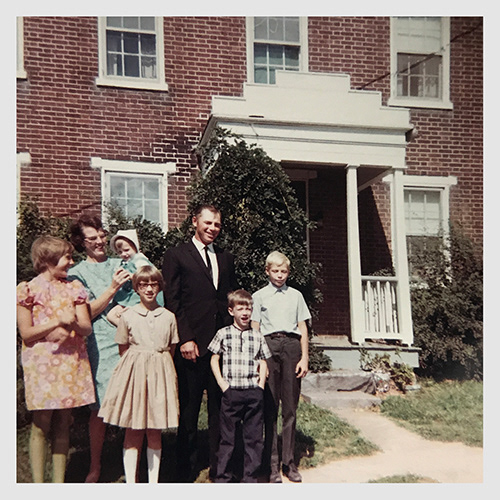
Tom Clowney is pictured with his wife, Joanne, and their children: Robert, Diane, Donna, John, and Carol, in the 1960s.

Clowney serves as a role model not only for farmers or the local community but for all Americans. Throughout his life, Tom has consistently demonstrated a strong work ethic, a deep commitment to the land and his community, and self-confidence in developing skills and achieving success. He has also shown a strong moral character as a man of faith.
Tom Clowney’s contribution to Pennsylvania history is a story worth sharing. With unwavering integrity and a strong commitment to his community, Clowney exemplifies the American dream as a living example of a life well lived.
Written by Scott Clowney.
Submitted to America250 on August 15, 2024.
Back to Top